When the tree comes down in Matthews, the stump stays behind, and it stays for longer than most people expect. A hardwood stump in Piedmont clay can sit solid for years, softening slowly from the top while its roots remain firm underground. Grinding it out is a separate decision from the removal itself, and the right answer depends on what the spot needs to do next, and when.
Leaving a stump is not neglect by default. In a back corner of the yard, a stump is mostly an eyesore that fades into the landscape. In the middle of a lawn, beside a driveway, or where anything new is planned, it is an obstacle that will outlast your patience. The seasons sharpen the choice, because what a stump does changes across the year.
What a left stump actually does
First, it may resprout. Many hardwoods common around Matthews, including oaks and maples, push vigorous shoots from a cut stump in spring, and a stump you ignore in March can be a small thicket by July. Those sprouts grow from the stump's stored energy and old root system, so they grow fast, and cutting them once rarely ends it; they return until the roots exhaust themselves or the stump is ground out.
Second, it decays on its own schedule. Fungi move in, the top softens, and over years the stump sinks as the wood underground breaks down. That sinking is the quiet problem: a stump under a lawn leaves a shallow depression as it rots, and a stump ground out and backfilled can settle a little too. Third, a decaying stump draws insects. Termites and carpenter ants work dead wood wherever they find it, and while a stump across the yard is no emergency, one tight against the foundation deserves a shorter leash.
What grinding does, and what it does not
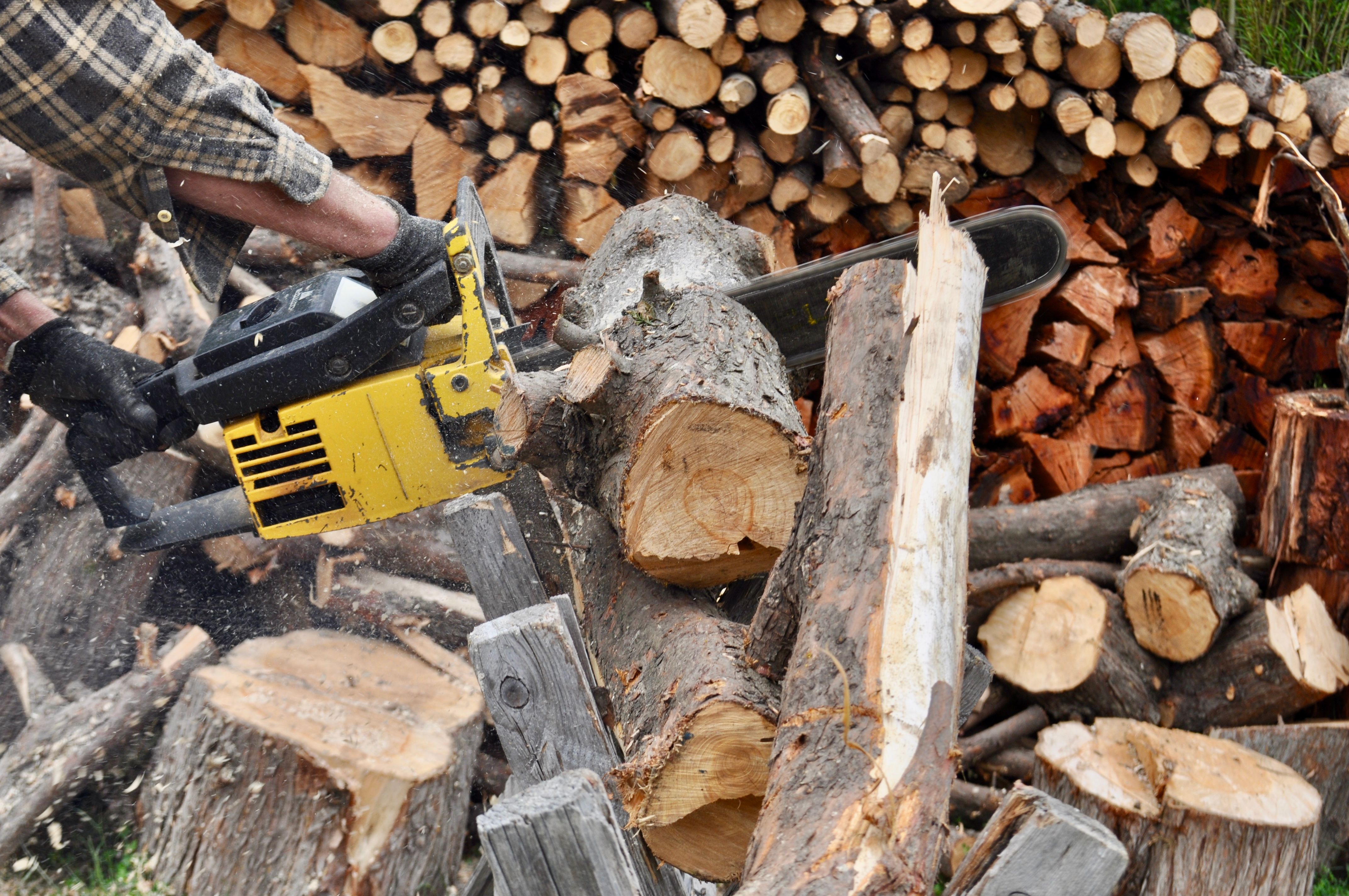
A stump grinder chews the stump and the near-surface roots down to a depth typically several inches below grade, turning wood into a pile of chips and soil. That depth is enough to turf over, plant grass, or set a bed. It is not a full excavation: deeper roots remain in the ground and decay in place over time, which is fine for lawn and plantings but worth knowing before a footing, fence line, or new tree goes in the exact spot. A new tree, especially, should be offset from the old stump's ground-out center, where settling soil and old root wood make poor footing.
The chip pile surprises people. Grinding a large stump produces more material than the hole it leaves, and the excess has to be hauled off, spread as mulch away from trunks, or worked in knowing it will settle. Fresh chips also tie up nitrogen at the soil surface as they break down, one reason new grass over a freshly ground spot sometimes yellows in its first season and perks up once the chips settle and feeding resumes.
Grind it now if any of these are true
- The stump sits in mowed lawn where the mower, and ankles, keep finding it
- It resprouts every spring and the shoots are winning
- Anything is planned for the spot: planting, patio, fence, play equipment
- It stands close to the house and is softening, drawing insects toward the foundation
- You are selling or listing the home and the yard needs to read as finished
- It is a tripping hazard on a path, beside a driveway, or where kids play
The seasonal angle
Spring is when resprouting tells you whether a left stump will behave. Summer storms are when a rotting stump near a path becomes a wasp and ant address. Fall is the practical season to grind if the spot is destined for fescue seed, since grinding, backfilling, and leveling ahead of the fall seeding window lets the new grass establish over a settled surface instead of a sinking one. Winter grinding works fine too and often schedules faster, with firm ground for equipment. If you are weighing a specific stump, R Watkins Tree Service can tell you plainly whether it is a grind-now stump or a leave-it stump; both answers are legitimate, and the honest one depends on the spot.
Common questions
Will grass grow over a ground-out stump?
Yes, once the chips are leveled, excess is removed, and the area is topped with soil and seeded. Expect some settling in the first season and a patch that may need a light top-up and reseeding the following fall.
Can a stump come back as a tree if I leave it?
Many hardwoods resprout vigorously from the stump, but sprout growth makes a weak, multi-stemmed clump rather than a sound replacement tree. If you want a tree in that spot, grinding the old stump and planting fresh nearby is the better path.
How deep does stump grinding go?
Typically several inches below ground level, enough for turf and shallow planting. Deeper roots stay and decay naturally underground. Tell the crew if a footing or structure is planned for the spot, since that changes the conversation.
Photos in this guide are representative stock images.
← All guides from R Watkins Tree Service← Back to R Watkins Tree Service