The storm has passed in Matthews, the power may still be out, and there is a tree, or part of one, somewhere it does not belong. The first 48 hours after storm damage are when good decisions matter most and when the worst injuries happen, because storm-damaged trees are under tension and compression in ways that are invisible from the ground. This walkthrough is for a homeowner facing it for the first time: what to do, in order, and what to leave entirely alone.
Start from a distance. A damaged tree is not a static object. Limbs hung up in the crown, called hangers, can drop without warning. A split trunk can finish splitting. Roots under a leaning tree can let go. Everything in the first hours is observation from safe ground, documentation, and phone calls, not cleanup.
- Check for wires first. If any line is down or a tree is touching one, treat it as energized, keep everyone well back, and call the power company before anything else. No cleanup happens near a line, period.
- Walk the property from safe ground. Note leaning trees, lifted soil at bases, split trunks, and limbs hanging in crowns. Stay out from under anything suspended, and keep kids and pets inside that zone too.
- Photograph everything before touching it. Wide shots and close-ups, from several angles. Documentation made before cleanup is the record that matters for any claim and for the crew assessing the work.
- Make the house weather-tight if you safely can. A tarp over a punctured roof section, from a ladder only if the tree is not resting on that area, limits the second wave of damage, which is water.
- Clear only what is loose, on the ground, and small. Hand-carrying fallen twigs and small branches from a driveway is reasonable. Anything requiring a saw near a hung-up limb, a sprung trunk, or a root plate is not.
- Call for assessment while the phones are busy. Storm work queues form fast across the county. Getting on the list at R Watkins Tree Service in the first day, with photos ready to share, puts your tree in line while you handle the rest.
- Re-check after the first rain. Saturated Piedmont clay gives way slowly. A tree that stood at hour six can lean further at hour thirty once the soil is soaked, so the survey is not a one-time event.
Why storm work is the most dangerous kind
A healthy tree being taken down behaves predictably. A storm-damaged tree is a loaded spring. A bent limb stores energy and can kick when cut. A trunk split lengthwise can roll or snap shut on a saw. A partially uprooted tree is held by a root plate and soil tension that cutting the trunk can release all at once, standing the root ball back up or dropping the tree sideways. Professional crews read these loads before cutting, rig limbs to be lowered rather than dropped, and work from positions the wood cannot reach. That judgment, not the saw, is what you are hiring.
Hangers and split trunks, specifically
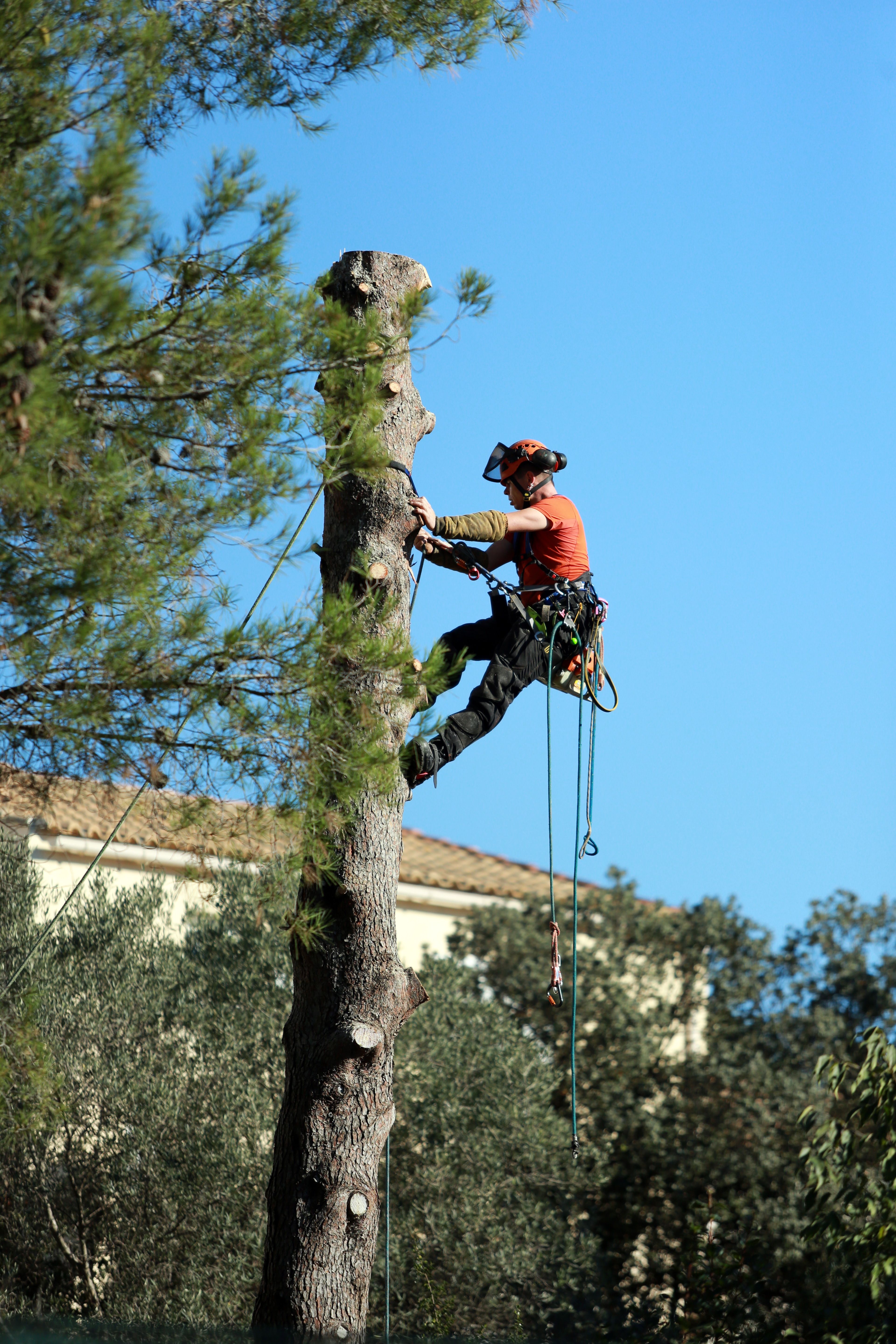
A hanger is any broken limb caught in the crown above. It is the single most deceptive storm hazard because it can sit quietly for days and fall in the next breeze, and it is the reason the area under a damaged crown stays closed until a crew clears it. Split trunks, where the trunk has forked apart but both halves still stand, are similarly unstable: the split travels with wind load, and propping or strapping a split trunk from the ground does not make it safe to work or park under.
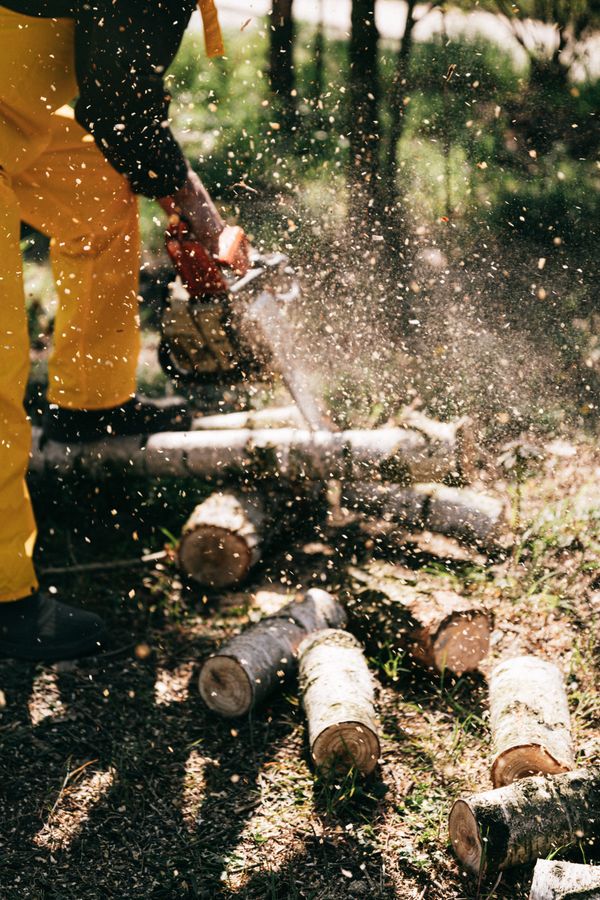
One more first-48-hours trap is the helpful neighbor with a saw. Post-storm is when the most chainsaw injuries of the year happen, usually to homeowners working on wood under tension, on ladders, or both. The ground-level, loose, small rule from the steps above exists precisely for this window. Everything above that line waits for rigging, ropes, and people who do it daily.
Common questions
A limb is on my roof but nothing is leaking. Can it wait?
It should still be assessed promptly. A resting limb shifts with wind and adds load with rain, and what is a resting branch today can become a puncture in the next storm. Keep the room below it unused until it is cleared.
Can I cut the small tree that fell in my yard myself?
A tree fully down, not touching wires, not hung up on anything, and small enough to work from the ground is the one reasonable exception. If it is leaning, suspended, sprung, or near a line, it is professional work.
How fast will a crew get to me after a big storm?
It depends on the scale of the storm, and queues after widespread damage can run days. Calling early, having photos ready, and flagging hazards like blocked driveways and roof contact help your job get triaged correctly.
Photos in this guide are representative stock images.
← All guides from R Watkins Tree Service← Back to R Watkins Tree Service