A pruning cut is a wound a tree has to close, and how the cut is made decides whether closing takes a season or never quite happens. Matthews yards are full of the evidence: stubs that rotted back into the trunk, and flush cuts scraped flat against the bark that left a dead, discolored patch the tree could not seal. The three-cut method and a simple respect for the branch collar are the whole difference, and they cost nothing but patience.
A tree does not heal the way skin does. It compartmentalizes, walling off damaged wood and growing new wood over the wound from the edges. That new growth rolls in from the branch collar, the slightly swollen ring of tissue where a branch meets the trunk or a larger limb. Cut the collar off with a flush cut and you remove the very tissue that closes the wound, while also cutting into trunk wood that did not need wounding. Leave a long stub and the stub dies, decays, and carries rot back toward the trunk before the collar can seal it off. The target is narrow: just outside the collar, no more, no less.
The three cuts, in order
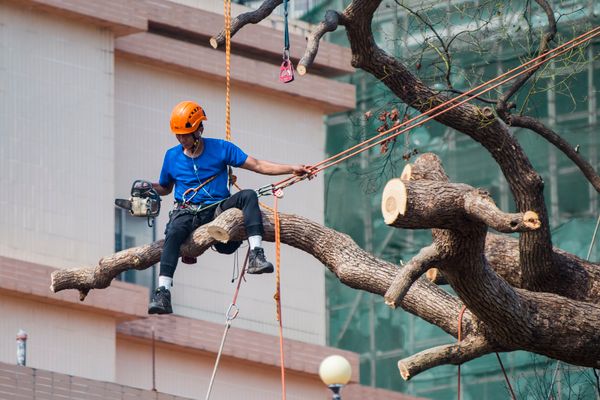
The first cut is an undercut, made on the underside of the branch a short distance out from the trunk, sawing upward partway through the branch. The second cut is made from the top, slightly farther out, and it removes the branch's weight. Because the undercut is already there, the falling branch stops at it instead of tearing a long strip of bark down the trunk, which is the classic injury a one-cut removal leaves behind. The third cut is the careful one: with the weight gone, the remaining short stub is cut just outside the branch collar, at the angle the collar dictates, so the tree can roll new wood over a small, clean wound.
Small branches that can be held in one hand while cutting do not need the full sequence; one clean cut outside the collar does it. The method matters as branches get heavy enough to tear bark, which happens sooner than most people guess, especially on long horizontal limbs of oaks and pines after rain has loaded them with water.
What waiting and bad cuts cost the tree
This is where neglect compounds. A dead branch left hanging in the crown does not stay the same size of problem. Decay works from the dead wood toward the attachment, the branch gets weaker as it gets lighter and drier, and the eventual failure tends to happen in a storm, over whatever is underneath, rather than on a calm Tuesday with a crew present. A stub left by a hurried cut does the same work from the other direction, rotting inward while the tree spends years trying to seal a wound that was made too large or in the wrong place.
Bad pruning also invites the next problem in. Every oversized or torn wound is an entry court for fungi and borers, and a stressed tree in a Piedmont summer, humid, storm-battered, and short on water in August, defends those entries poorly. Compare that with the small end of the scale: a dead limb removed cleanly when it is noticed, a young tree's crossing branches corrected with two small cuts instead of one large one five years later. Pruning done early and correctly is small cuts on a schedule. Pruning done late is large cuts under pressure, and trees keep the receipts for both. If a limb over the roof or driveway is beyond ladder-and-loppers territory, that is the professional line, and R Watkins Tree Service handles exactly that end of the work.
Common questions
Should I paint or seal a pruning cut?
Generally no. Standard practice is to leave cuts unsealed so the tree can compartmentalize naturally; dressings can trap moisture against the wound. A clean cut outside the collar does more for the tree than any coating.
What is the branch collar and how do I find it?
It is the slightly raised, often wrinkled ring of bark where a branch joins the trunk or a larger limb. Cut just beyond it, following its angle, rather than flat against the trunk or far out on the branch.
When is the best time of year to prune?
For most shade trees, late winter, while dormant, is ideal: structure is visible and the tree closes wounds as spring growth starts. Dead and hazardous limbs, though, should come off whenever they are noticed, in any season.
Photos in this guide are representative stock images.
← All guides from R Watkins Tree Service← Back to R Watkins Tree Service