A lightning strike on a tree rarely announces its full damage on day one. The bark may split in a long spiral strip, leaves may wilt within days, or the tree may look almost untouched and then fade over the following season. That delay is what makes the decision hard for Matthews homeowners: the tree standing in the yard a week after a summer thunderstorm is not necessarily the tree you will have next spring.
Lightning damages a tree in more than one way at once. The current travels down the trunk, heating moisture in and under the bark until it flashes to steam, which is what blows bark off in strips. Roots can be damaged underground where nothing is visible. And a strike that kills a section of the cambium, the thin growing layer just under the bark, leaves the tree unable to move water and nutrients past that point, even if the crown still looks green.
What to look at in the first week
Walk the trunk slowly and look for bark damage. A narrow scorch line is a different problem from bark stripped around most of the trunk's circumference. Bark loss that wraps a large share of the trunk usually means the cambium below it is dead, and dead cambium does not regrow across a wide gap. Check the ground line too: uprooting at the base, lifted soil, or a fresh lean after the storm points to root or structural damage, which is a safety question, not a health question.
Then look up. Scattered dead branch tips in the week after a strike can be shock. A whole side of the crown browning, or leaves wilting across the entire canopy while neighboring trees stay green, suggests the trunk damage is interrupting flow to the whole tree. Take dated photos from the same spots. A struck tree is judged on change over time, and your photos become the record.
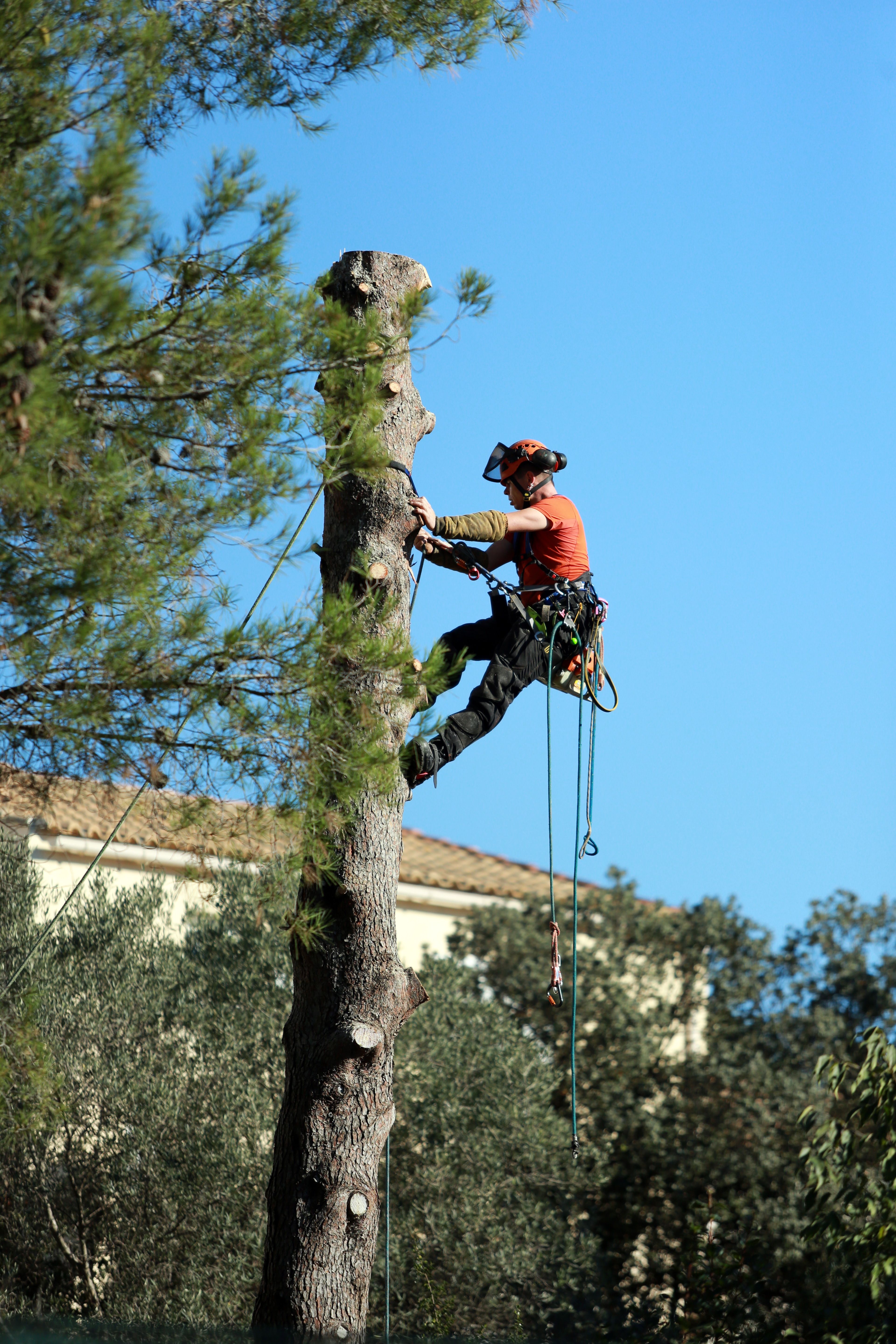
Monitor or remove: sorting the signs
Not every struck tree dies, and not every living tree is safe to keep. Trees with limited bark damage and a full, green crown often recover, sometimes with a visible scar for life. Trees that lose most of their bark around the trunk, crack deeply, or stand over a roof, driveway, or play area move into a different category, because a declining tree near a target is a hazard decision as much as a health one. The table below sorts the common findings.
| What you find | What it usually means | Sensible next step |
|---|---|---|
| Narrow bark strip, crown fully green | Surface and limited cambium damage | Monitor through the next growing season, water during dry spells |
| Bark stripped around most of the trunk | Cambium killed around the circumference | Get an assessment; recovery is unlikely and decline is expected |
| Deep vertical crack in the trunk | Structural split, not just bark loss | Treat as a safety issue, especially near the house |
| One side of the crown browning | Flow interrupted to part of the tree | Monitor closely; prune dead wood once the pattern settles |
| New lean or lifted soil at the base | Root plate damage | Do not wait; a compromised base can fail in the next storm |
| No visible damage, tree fades months later | Root or cambium injury showing late | Assessment to separate decline from drought or disease |
The monitoring season, done properly
Monitoring is not just watching. A struck tree under stress is a target for bark beetles and borers, which move into weakened pines and hardwoods across the Piedmont and can finish a tree that might have recovered. Keep the tree watered during dry stretches, especially in its first summer after the strike, since a damaged root system cannot chase moisture the way a healthy one does. Keep mulch over the root zone in a wide, flat layer, pulled back from the trunk itself, to hold soil moisture steady.
Hold off on heavy pruning right after a strike unless a branch is broken or hanging. The tree needs its remaining leaves to feed recovery, and the full pattern of dieback often takes weeks to declare itself. Pruning dead wood once, after the damage has sorted itself out, is better than cutting green wood on a guess. Fertilizer is not a rescue treatment either; pushing growth on a tree struggling to move water adds stress rather than relieving it.
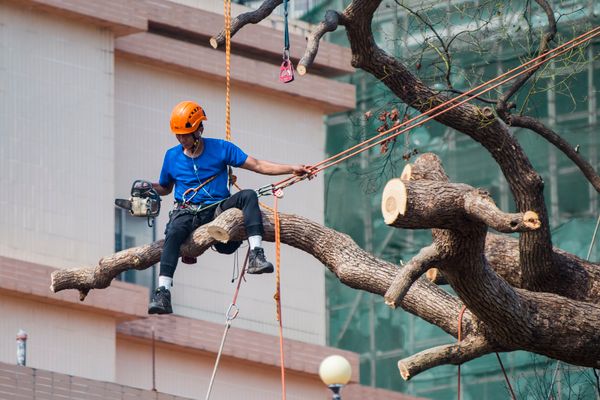
When removal is the honest answer
Removal enters the conversation when the tree is dying and stands where it can land on something, when the trunk is cracked or hollowed at the strike point, or when decline keeps advancing through a full growing season despite water and care. A dead tree left standing does not stay solid; decay moves into the wood, and a tree that could have been climbed and lowered in sections can become one that has to be handled far more carefully. If you want a professional read on which side of the line your tree sits, R Watkins Tree Service can assess it in person. The point of the assessment is not a verdict on the spot; it is a measurement of bark loss, structure, and targets that turns a guess into a decision.
Common questions
How long before I know if a lightning-struck tree will survive?
Often a full growing season. Some damage shows in days, but root and cambium injury can take months to work through the crown, so a tree green in August is not fully cleared until it leafs out well the following spring.
Can a struck tree attract lightning damage to my house?
The concern is the tree itself, not repeat strikes. A dead or split tree near the house is a falling hazard in the next storm, which is why structure and lean matter more than the strike itself after the first week.
Should I seal or paint the bark wound?
Generally no. Wound dressings do not speed a tree's own compartmentalizing of damage and can trap moisture against the wood. Clean monitoring, water during drought, and removing hazards serve the tree better.
Photos in this guide are representative stock images.
← All guides from R Watkins Tree Service← Back to R Watkins Tree Service